Forty Fever
Hard to believe it’s almost the end of the year and I’m only now writing my first blog post of 2025. Not one entry all year. Shocking, really. But that doesn’t mean I’ve been quiet. Far from it.
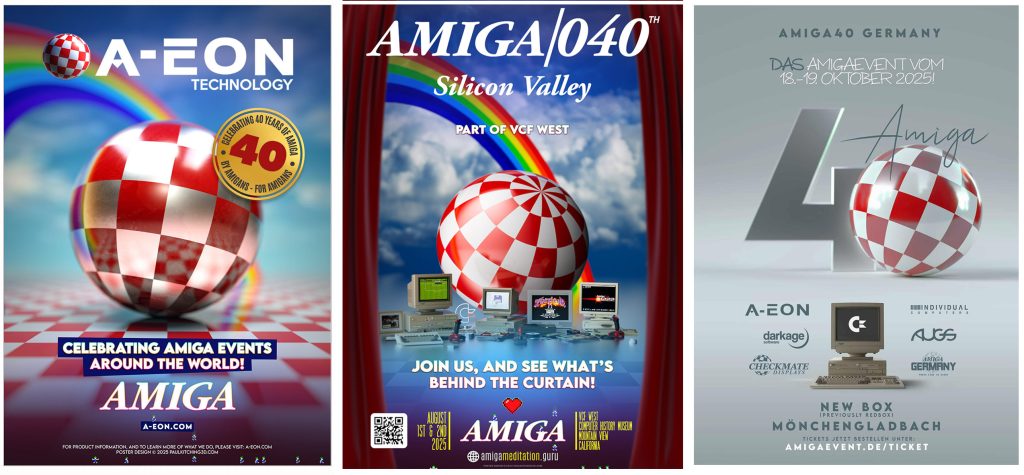
The Amiga turned 40 this year, and the celebrations stretched across the globe. Germany, California, the UK and many other countries. I was fortunate to attend several of them, and sponsor a few more. Alongside that, I kept the keyboard warm with my regular Amiga Soapbox column in Amiga Future magazine. Nine articles this year, which included a three-part interview with John Böhmer, the founder of Scala Inc.
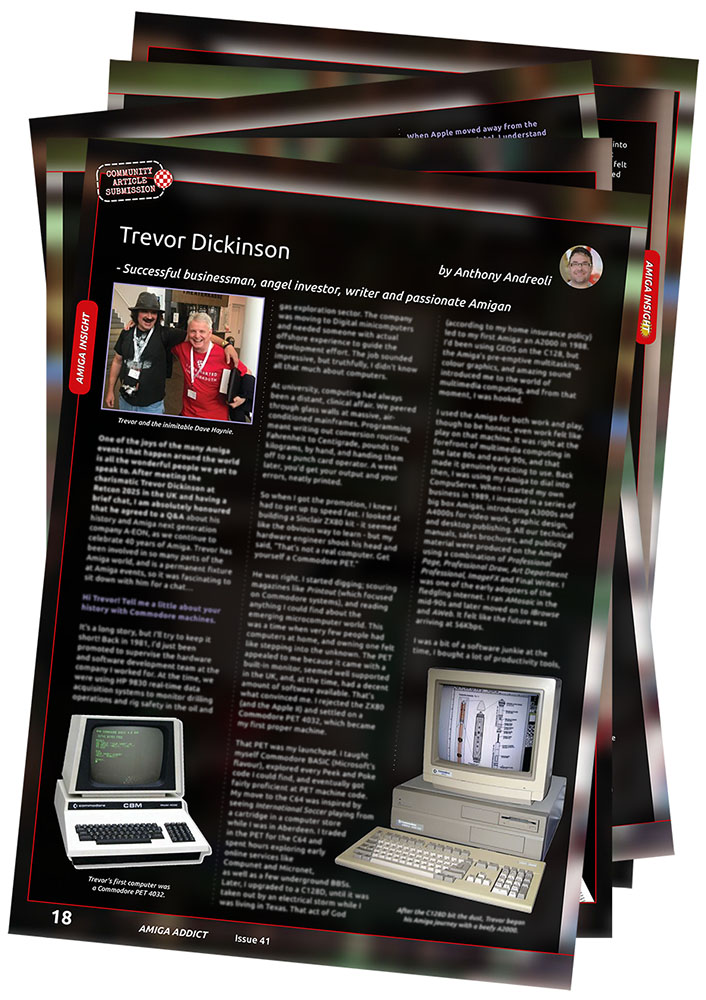
I also took part in a feature interview by Anthony Andreoli, which appears in the current edition of Amiga Addict (UK).
Of course, the Amiga isn’t my only passion. Outside the scene, I continue to support early-stage startups as an angel investor in New Zealand helping new ideas get off the ground, just as the Amiga once did.

And if that wasn’t enough, I somehow managed to finish a novel. Neural Lace. A psychological thriller about AI, control, and what happens when the system stops taking orders. So yes, I’ve been busy. Still here. Still Amiga. Still alive and kicking.
From the Soapbox – A Year in Columns
While the blog went quiet, the Soapbox didn’t. I kept up a regular column in Amiga Future throughout 2025. Nine articles in total, covering everything from firmware updates and travel stories to RJ’s smile and one very loud synthwave party.
The year started with a firmware update to the A600GS. Quick, easy, painless. And satisfying, too. There’s something deeply Amigan about clicking a single icon, rebooting, and seeing a machine behave just that little bit better. The A600GS also got a fun addition: the ability to read real Amiga floppies via Rob Smith’s Drawbridge USB drive. Load up your dusty disks, plug in, and off you go. It felt like time-travel, only smoother. There were game releases too, including the fast-paced Christmas shooter Santatron 2024. I was hopeless at it, but the update process was flawless. Final Writer hit version 7.2, and we saw more productivity tools appear over the year. Small things that show a bigger picture: the platform is alive and growing.
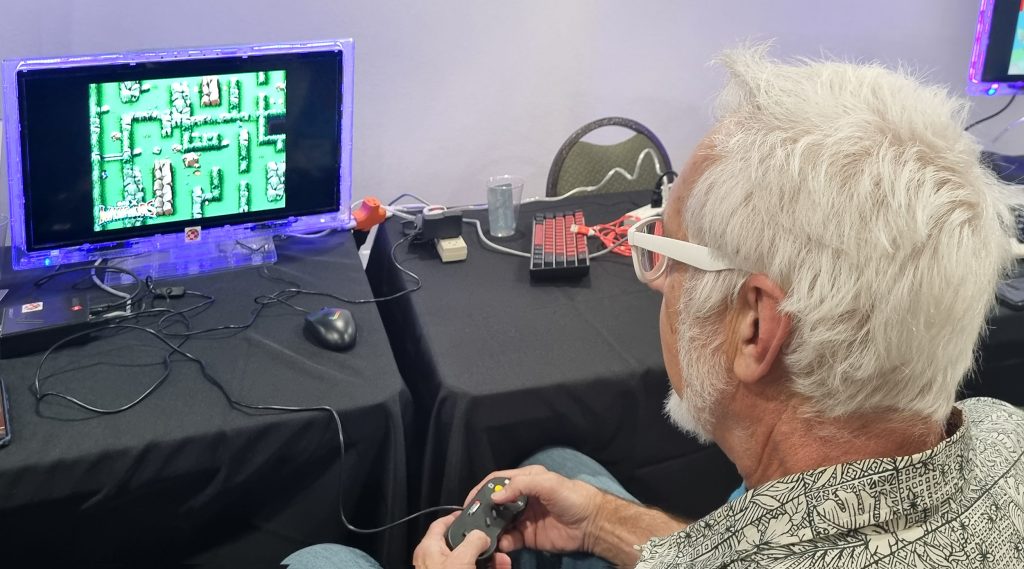
Then came the shows. RetCon 2025, and the Amiga 40th Silicon Valley as part of VCF West at the Computer History Museum in Mountain View, California. Followed by Amiga 40 in Germany, SWAG 2025 in the UK, then AmiWest 2025. I covered most of them in my Soapbox articles, often just before or just after boarding a plane. Some of the travel details are worth repeating, the quiet moment with Dave Haynie at the hotel bar at the Fire & Ice, hotel in Neuss. And then RJ, grinning ear to ear as he played UrbX Warrior on the A600GS. That image stuck with me. Pure joy. A full circle moment.
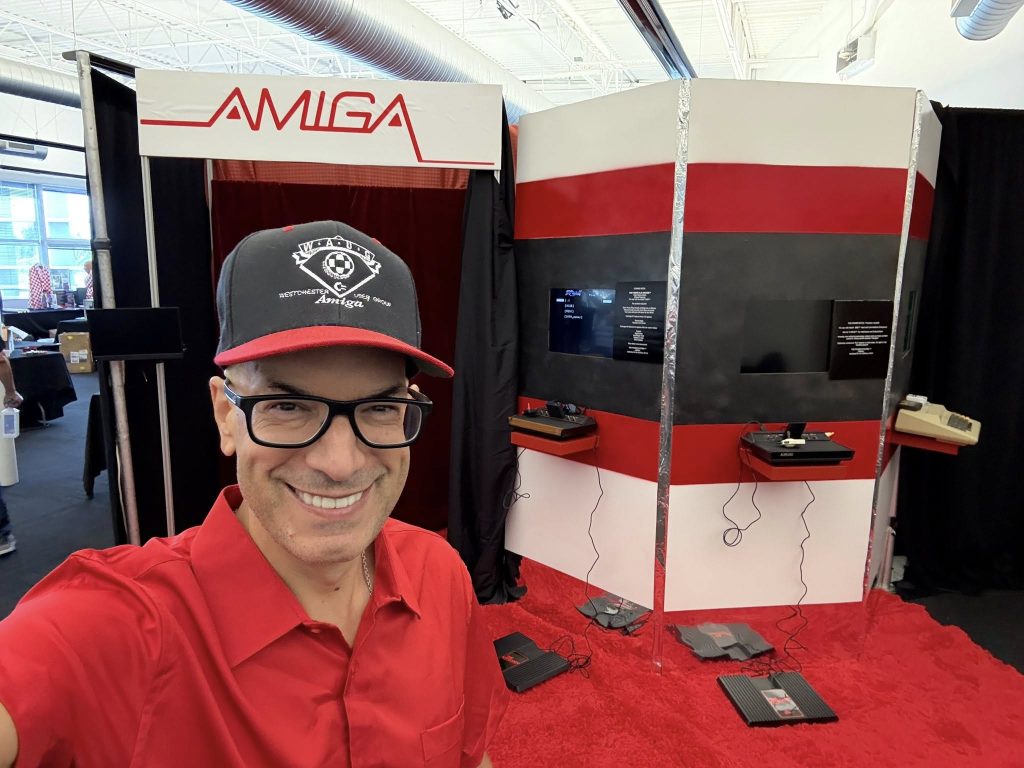
The Amiga 40th at Mountain view was a high point. It had a different vibe, more public, more educational, but still distinctly Amiga. Thanks to Dale Luck and others, the show featured a stunning recreation of the original Amiga CES booth from Chicago 1984, complete with period-accurate posters, hardware, and setup. It was a powerful throwback. Not just nostalgia, but a genuine homage to where it all began. Matthew Leaman and I, along with other volunteers including several original Amiga developers, helped to install the special Amiga display. I gave a talk titled “What is an Amiga in 2025?” to a room full of people, some of whom had never touched one.

Later that evening came the Ammi Awards. Bill Borsari’s black-tie ceremony and his attempt to recapture a bit of the glamour and magic of the original Amiga launch event in New York back in 1985. It wasn’t just for show. It felt earned. A celebration not only of legacy but of the people still pushing things forward.
And of course, Amiga 40 in Germany.
Held in a big new venue in Mönchengladbach, it was the largest Amiga show of the century. Packed, buzzing, and built with real passion. Markus Tillmann and his team did an outstanding job. The new location worked brilliantly, and the scale of the show was something else. It wasn’t just the crowds — although there were plenty — it was who showed up. Original Amiga and Commodore developers, veterans from the old guard, and modern creators, many of them back under one roof for the first time in decades.
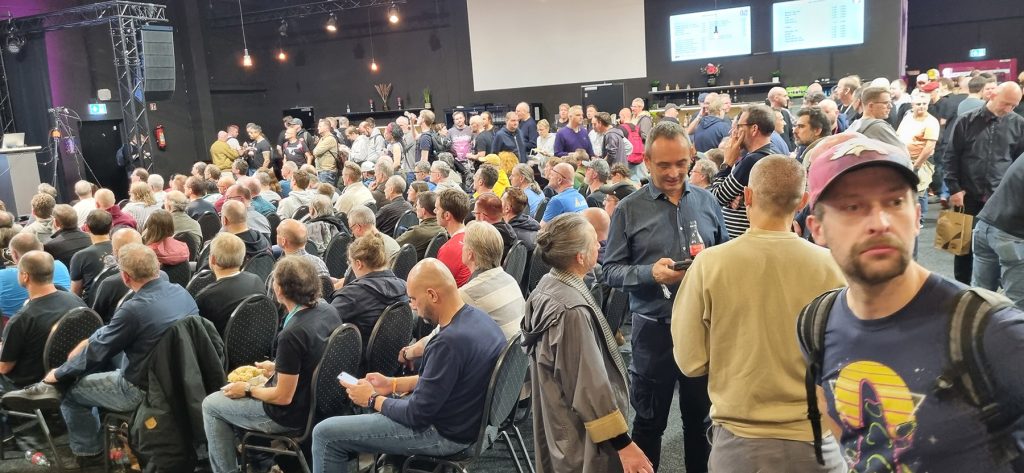
You could feel the energy from the moment you walked in. Not just nostalgia, but a sense that something was still alive and still moving forward. The message was simple. The Amiga didn’t die. It adapted. It endured. And it’s still here. And then there were the unexpected moments.
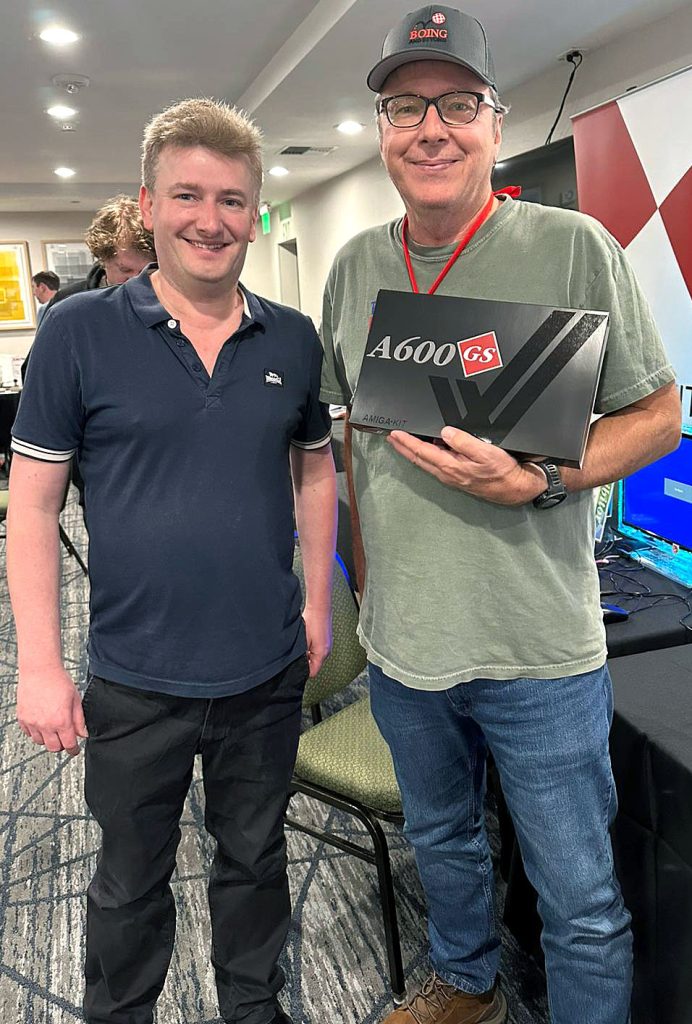
Watching RJ play. Carl Sassenrath buying an A600GS. Bodega Bay expansion units turning up at RetCon. Charles Hoffer sharing his collector’s passion. Gino Calestini unboxing his second A1222 Plus. The Soapbox was never just about updates. It was about connection. Moments that show why we’re still here, still tinkering, still writing, still showing up. Still bouncing. Still brilliant. Still ours.
New Boards, Old blood
This year wasn’t just about anniversaries. It was about momentum. Real hardware. Boards in-hand, not just on wish-lists. Classic and PowerPC. New takes on old designs. And a few surprises along the way.
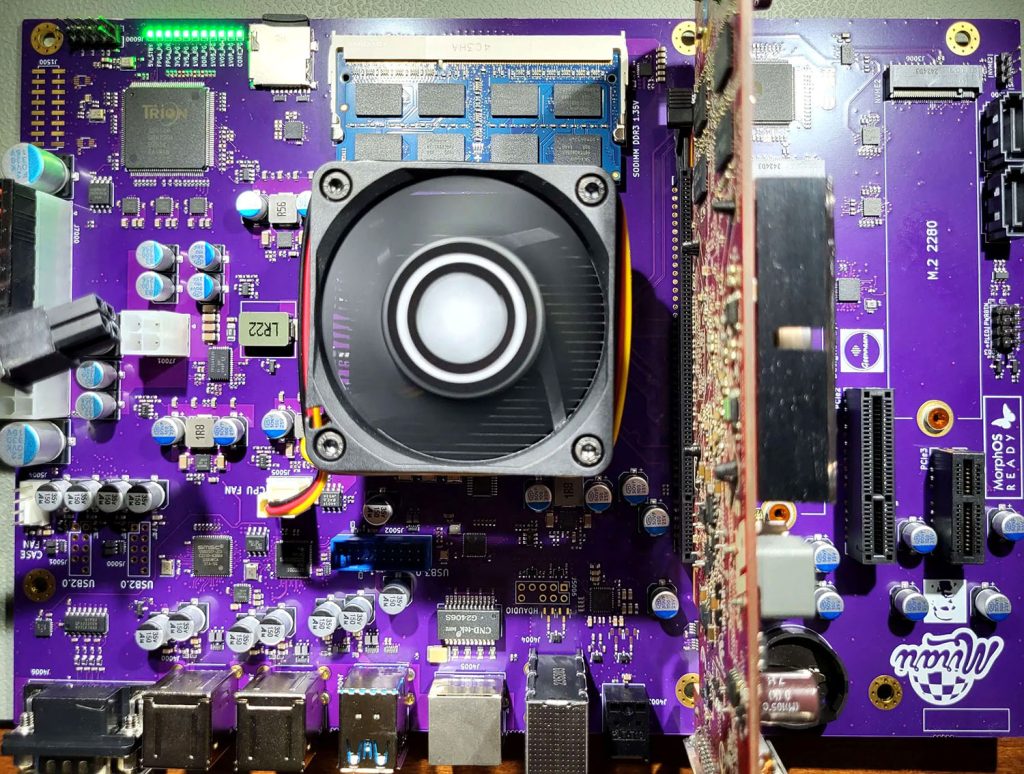
I brought a Mirari board back from Germany after the Amiga 40 show. Hand-carried it myself. It’s now set up here and running both MorphOS and Void PPC Linux. The board’s colour is purple, not an accident. Red plus blue.
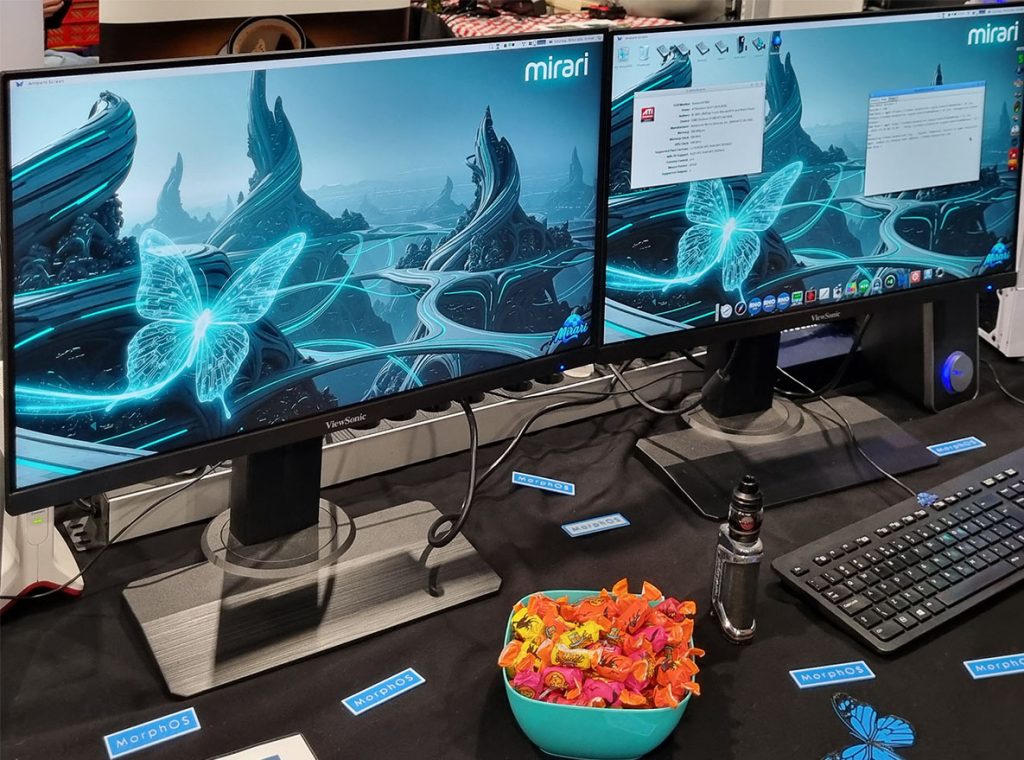
A quiet nod to supporting both AmigaOS 4 and MorphOS. The people behind it, Dave ‘Skateman’ Koelman and developer Harold Kanning, designed it with that intention. In collaboration with me, Dave has already sent boards to Thomas Frieden and Steve Solie to begin work on porting ExecSG. This is a critical step that has to be in place before AmigaOS 4 can run on the hardware. Once that’s done, the next step is securing an agreement with Hyperion Entertainment to create a full AmigaOS 4 port. That’s the goal. The community wants it, the hardware is ready, and now we need to make it happen.

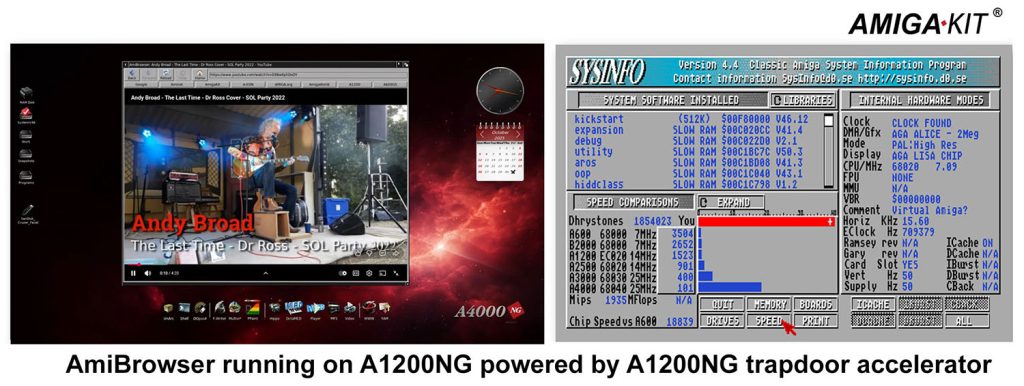
Next up, AmigaKit’s A1200NG. This one’s finished. It’s shipping now, and it’s working well. Built on ARM like the A600GS, it also uses AmiBench and supports online connectivity via Ethernet, Wi-Fi and Bluetooth for downloading updates and browsing the web. It includes the new AmiBrowser, fast, clean, and fully capable of modern web browsing. It brings real utility to the classic Amiga experience without losing the feel. The design is solid. It’s not a clone or a tribute; it’s a proper step forward.
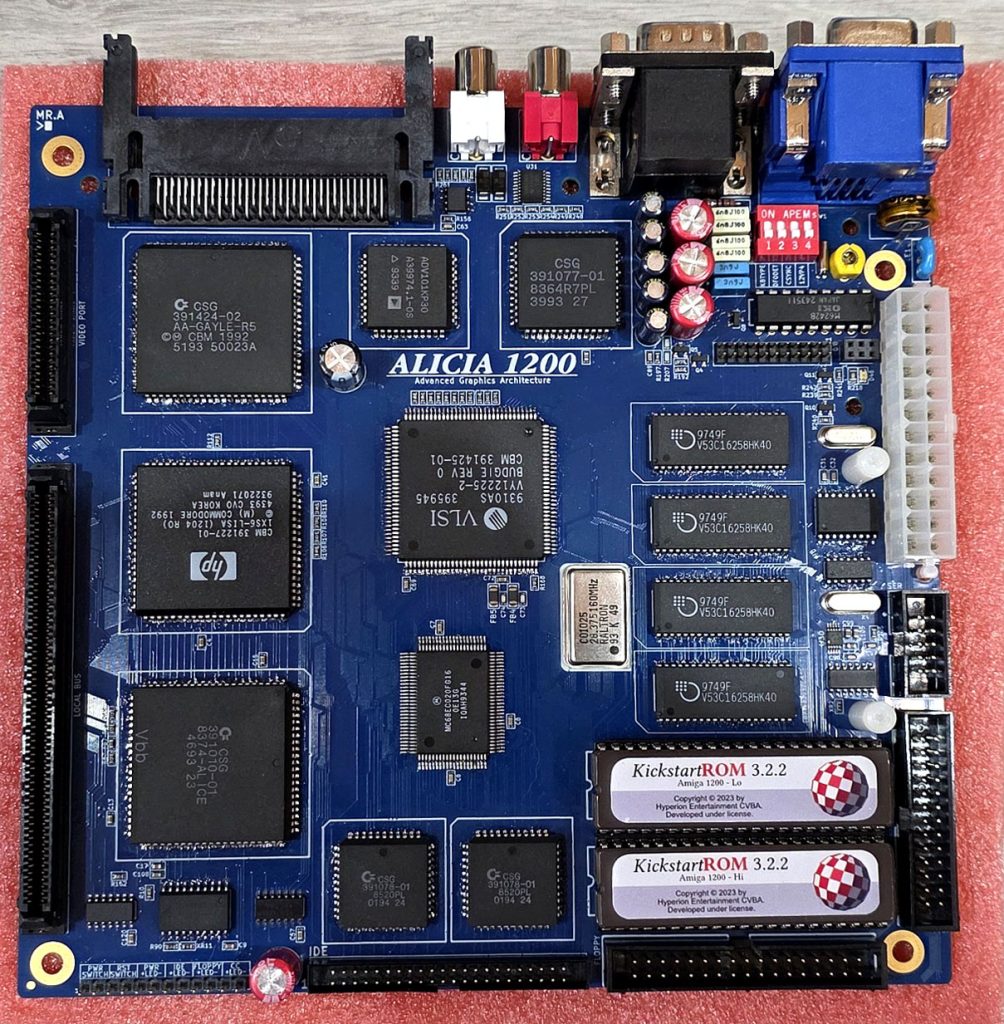
Finally, I received some Swedish love from Stefan Nordlander in the form of the Alicia 1200. A reimagined mini‑ITX version of the classic Amiga 1200 developed by the mysterious Mr. A. Compact and tidy. A proper board for builders and tinkerers who still want to run classic hardware in modern cases or small footprints.
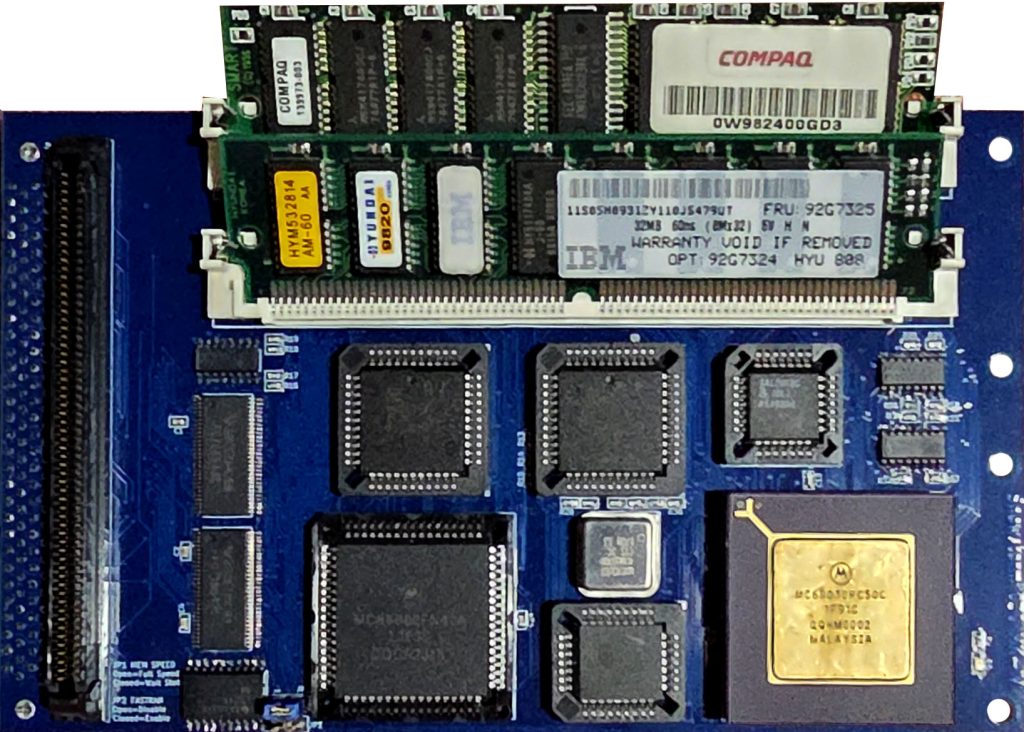
I received my Alicia 1200 a few days ago and haven’t had time to set it up yet, but it’s already clear this is a serious piece of kit. It respects the A1200’s spirit without being stuck in the past.
Three boards. Three directions. And not a single one of them imaginary.
Beyond the Horizon
The A1200NG was already turning heads, but the new accelerator took it to a whole new level. Installed in the trapdoor slot, it pushed the machine to 1,935 MIPS, over 100 times faster than the original A4000. YouTube playback, heavy-duty browsing, even video rendering. It just flew. That wasn’t the only reveal. AmigaKit confirmed development of the A4000NG, based on the same architecture. It’s early days, but the direction is clear. The A600GS, A1200NG, and A4000NG form a clean, consistent lineage, modern internals, Amiga soul.
Then there was the breakthrough in ExecSG. The Amiga’s second general PowerPC kernel. Steven Solie gave the update at AmiWest: full multicore support is finally within reach. Something that’s been waiting in the wings for a long time is now getting the push it needs. Proper resource handling across cores, not just token support. Real progress. I was also pleased to see Carl Sassenrath pick up an A600GS. Quiet moment, big message. The man who wrote the original Amiga Exec now has one of the newest Amiga-inspired machines on his desk. That felt right. And then, one last note.
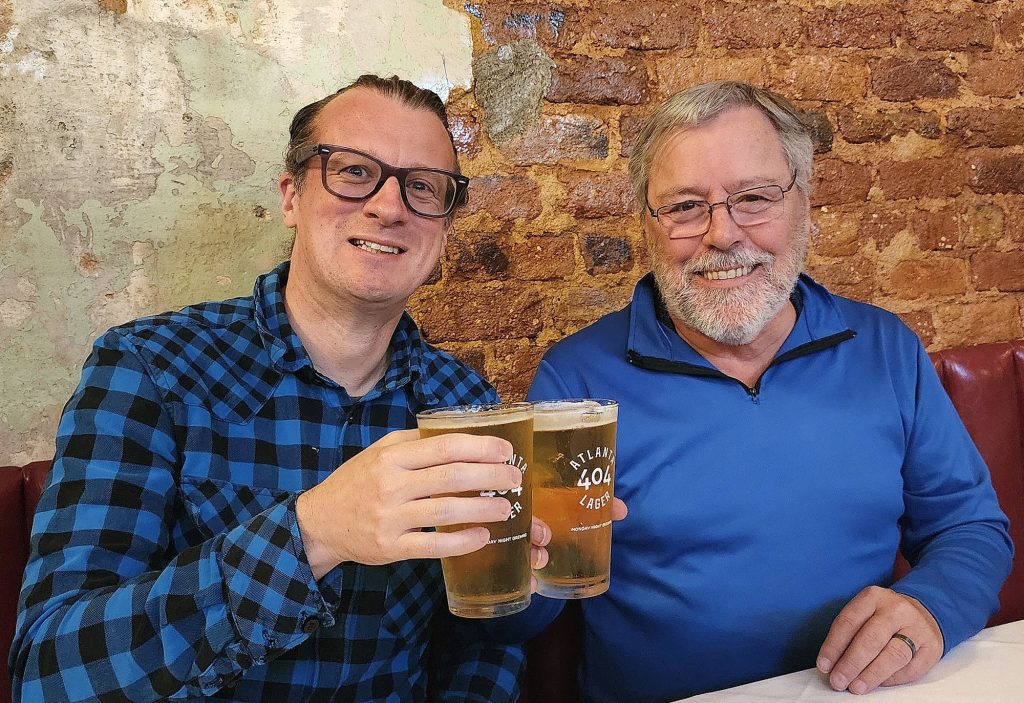
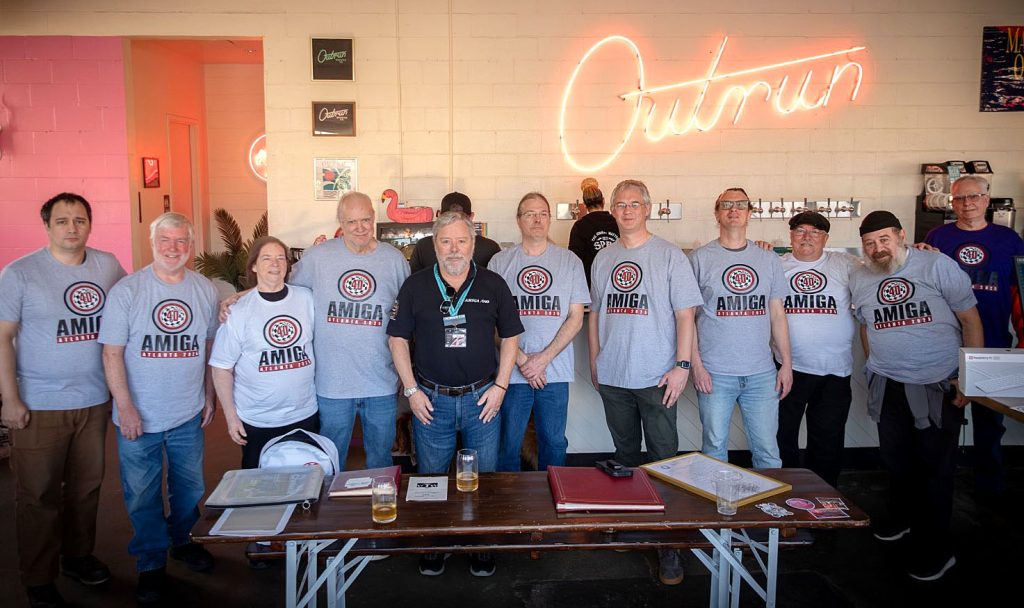
A quieter celebration, maybe, but no less important. Adam Spring hosted Amiga Atlanta at a synthwave-style microbrewery called Outrun Brewing. He called it his way of honouring the platform that shaped his creative DNA.
The quote he sent me said it best: “PCs come and go. Macs rise and fall. But the Amiga spirit? It will last forever.” He’s not wrong. Forty years on, it’s still here. And from what I’ve seen, it’s not slowing down.
Uncovering a Rarity
One of the real joys of attending shows like SWAG is the people. Everyone has an Amiga story, but some go deeper than most. This one comes from Darren ‘Smiffy’ Smith, a long-time Amiga user, collector, and passionate community advocate. We got talking in Chipping Sodbury, and by the time he was done telling me about his A3500T, I knew this needed to be shared.
“Back in April 1995, the management buyout of Commodore UK fell through, and it felt like losing a loved one. Amiga was everything to me — my artistic expression, my passion, my love. I was so sad.”
Darren attended what might have been the last World of Commodore show that same week, accompanied by his friend Yvonne and her two kids. Wandering the floor, he came across David Pleasance standing next to a towering mystery system with a sticker reading Commodore Amiga A3500. Darren had never heard of it.
“I asked David what it was. He said, ‘I haven’t got a clue.’ He didn’t know if it even worked. But it was for sale, and the price was reasonable.”
After a coffee and a gentle push from Yvonne — “If you don’t buy it, you might regret it forever” — he went back. With £200 cash, he left a deposit, and the next day went to David’s house to collect the machine. The garage, by Darren’s account, was legendary.
“You couldn’t fit a cigarette paper in there, it was packed so tight with gear. Things were falling out as he opened the door.”
What he brought home was more than a machine. It became his personal dream system. He rebuilt it, cleaned it, installed ROMs, added a Picasso II, and eventually upgraded to a Phase 5 060 accelerator and 128MB RAM. The A3500T ran UNIX, played MYST through ShapeShifter faster than a real Mac, and saw countless nights lost to Quake and Nighlong.
“It was a dream machine. Did everything I wanted. And I got to share it with my daughter, who sat beside me drawing in DPaint on my A4000 while I worked on the 3500T.”
But life changed. The marriage ended. The accelerator vanished. The A4000 disappeared. And the tower, once a centrepiece, went into storage.
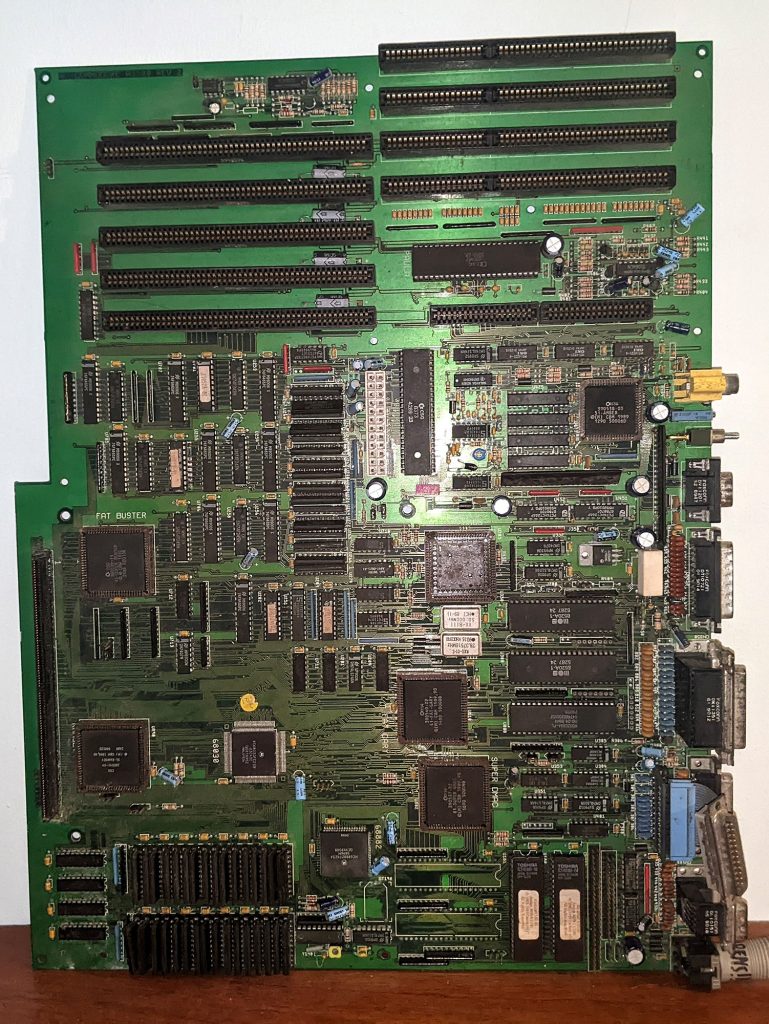
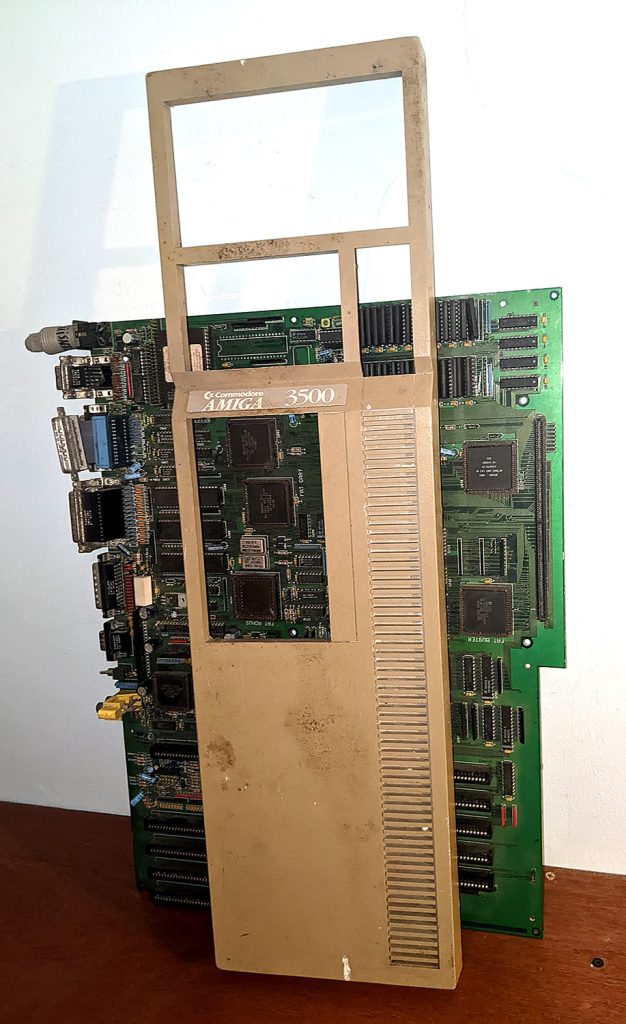
“It was put into storage where due to a roof collapsing, the Amiga was exposed to the elements. When I discovered this I removed the motherboard, cleaned it off and took it home to assess the damage. The weather did get to it to a degree but not too much. Agnus is dead and gone but there are signs of life on the board.“
Then the council got involved, said the roof was asbestos and carted everything away for safe disposal. So I lost the case but thankfully, the board and facia are safe! The original A3500T case was lost, but miraculously, Darren saved the motherboard and fascia. The board is now being methodically restored by a fellow enthusiast named Alan.
“He’s slowly removing and reflowing components. He’s amazing. It’ll take time, but we’ll get there.”
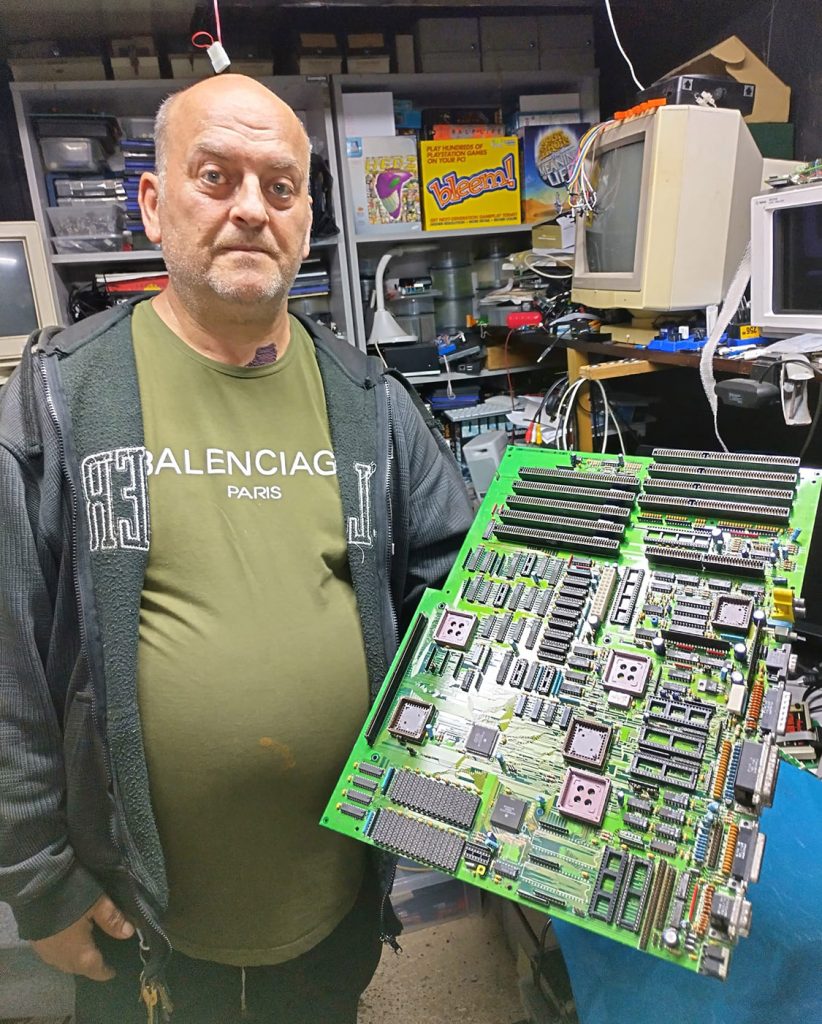
Darren’s not just restoring the board, he’s restoring his connection to the Amiga. He’s now a regular at many Amiga user group meetings in the UK including ANT, SWAG, NAG, Coastal Retro Events, Kickstarter shows, and even ComicCons, where he sets up classic systems to introduce the platform to new generations.
“I want people to see Amiga is still alive and kicking. I believe the Amiga scene today is about a community of people who shared a very special moment in time. Weren’t we all lucky?”
We certainly were Darren, we certainly were!
Building the Next Generation
Some Amigans collect for nostalgia. Some for the history. And some just want to build something new. Charles Hoffer is all three. He’s been on the Amiga path since 1988 — starting with an A2000HD, followed by a CDTV, and then an A4000D. From there, the collection grew. As he says: “I didn’t plan on this. It just kind of happened.”
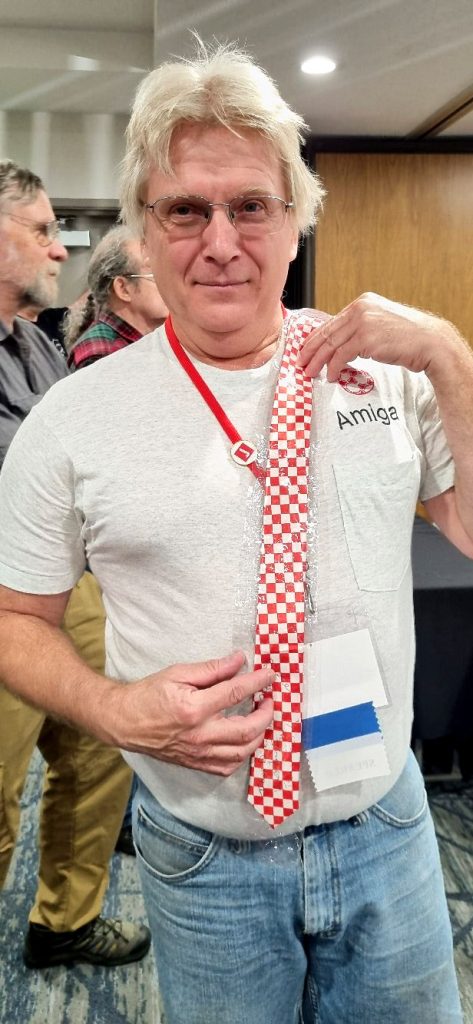
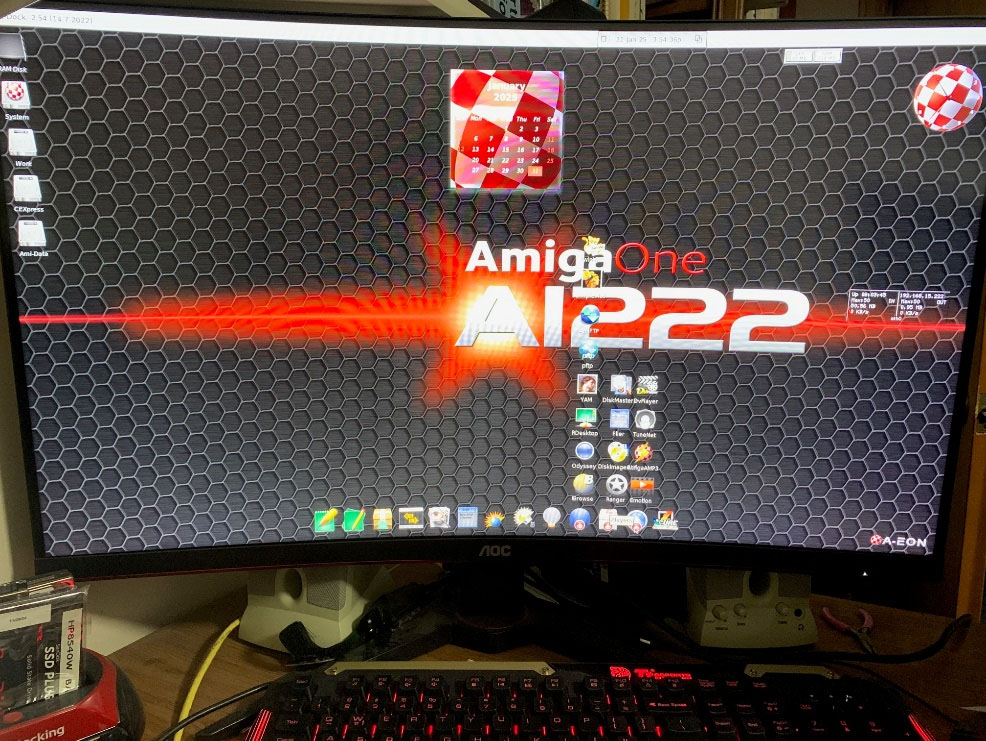
But as Commodore crumbled and the NG landscape began to shift, Charles stayed invested. He picked up an AmigaOne XE, which wasn’t the most stable ride, but it sparked a desire for something better. He had his eye on an X5000, but they were hard to find. That’s when he learned about the A1222 Plus and became an Early Adopter in January 2020. Then the world changed.
While delays mounted, Charles didn’t wait. He ordered a SAM460LE, and when the X5000 reappeared through Amedia Computers, he added a X5040 motherboard to the line-up too. By the time the A1222 Plus motherboard finally shipped in early 2023, he was ready with components, cables, cases, and experience and one goal: to build all three NG systems himself. He admits. “I didn’t plan on this. It just kind of happened.”
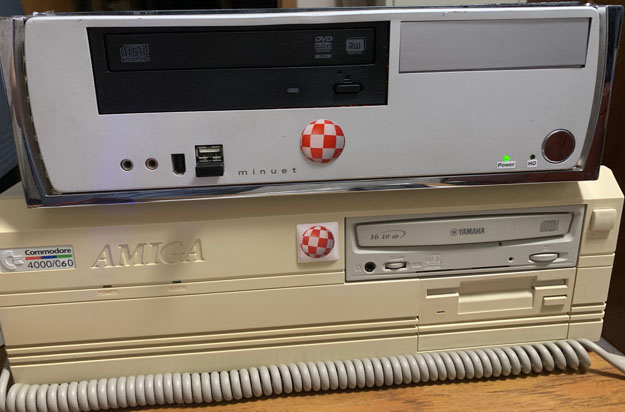
He didn’t want a tower this time. He tracked down a Minuet 350 low-profile case, sourced a compatible PSU, Radeon RX550 card, SSD, and custom RAM. He ran into build challenges, display ports, driver quirks, and some OS 4.1 booting headaches, but fixed them all with patience and persistence. Network tweaks. Power LED pinouts. File system workarounds. It wasn’t his first dance. “I’m not one to give up so easily. Eventually, I hit the power button… and there it was. The OS 4.1 Workbench. Success.”
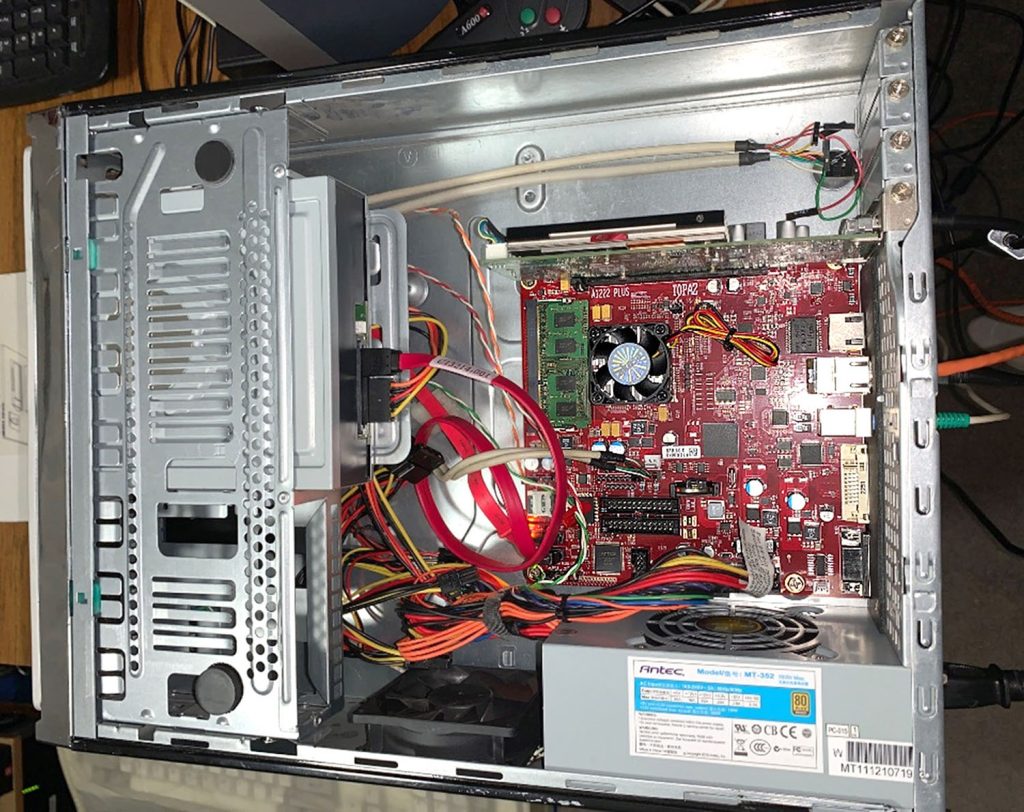
Of course, things weren’t perfect. He hit issues with DOpus 4.18.44 getting stuck in copy loops, sound card emulation crashes in OctaMED, and some performance quirks tied to the T1022’s lack of a standard FPU. But even here, Charles wasn’t discouraged, just practical. “We’re going back to the 68000 days where they’d compile one version without FPU and another with. It’s familiar. If the FPU emulation is improved, I’ll be happy.” He’s not shy about criticising weak points. But he’s also clear about what the machine is, and what it isn’t.
“Is the A1222 Plus an X5000? No. Is it a SAM460LE? No. It’s actually faster. It’s like comparing an A1200 to an A4000. And that’s what I think they were trying to achieve……..This production board is an infant… let’s see what updates get released to fix these issues.”
He’s written guides, logged performance comparisons, and documented build quirks for other users. He understands that criticism online often comes from people who haven’t touched the hardware. Charles has – all three of them.
One of the most powerful moments came during his AmiWest 2024 presentation. He gave a 63-slide talk on his collection, his builds, and his experiences. It was his first Amiga show since 1995. He thought people were just waiting for lunch. “I felt a hand on my shoulder. I looked over. It was Trevor Dickinson. He said, ‘I really enjoyed your presentation.’ I was honoured.” Over the next few days, Charles got to know the SACC team, chat with legends like Dave Haynie and Colin Proudfoot, and even convince his teenage daughter to enjoy the show. She played Njam, chatted with members, and shared the moment. Charles says, “If you’ve never gone to AmiWest, you’re really missing out.”
After building all three major NG platforms, Charles leaves no doubt about where he stands. “The only way to keep things moving forward is to support the Amiga vendors. Buy the hardware. Buy the drivers. Buy the apps. I know I want to keep this party going.”
I couldn’t agree more Charles.
Reflections and Echoes
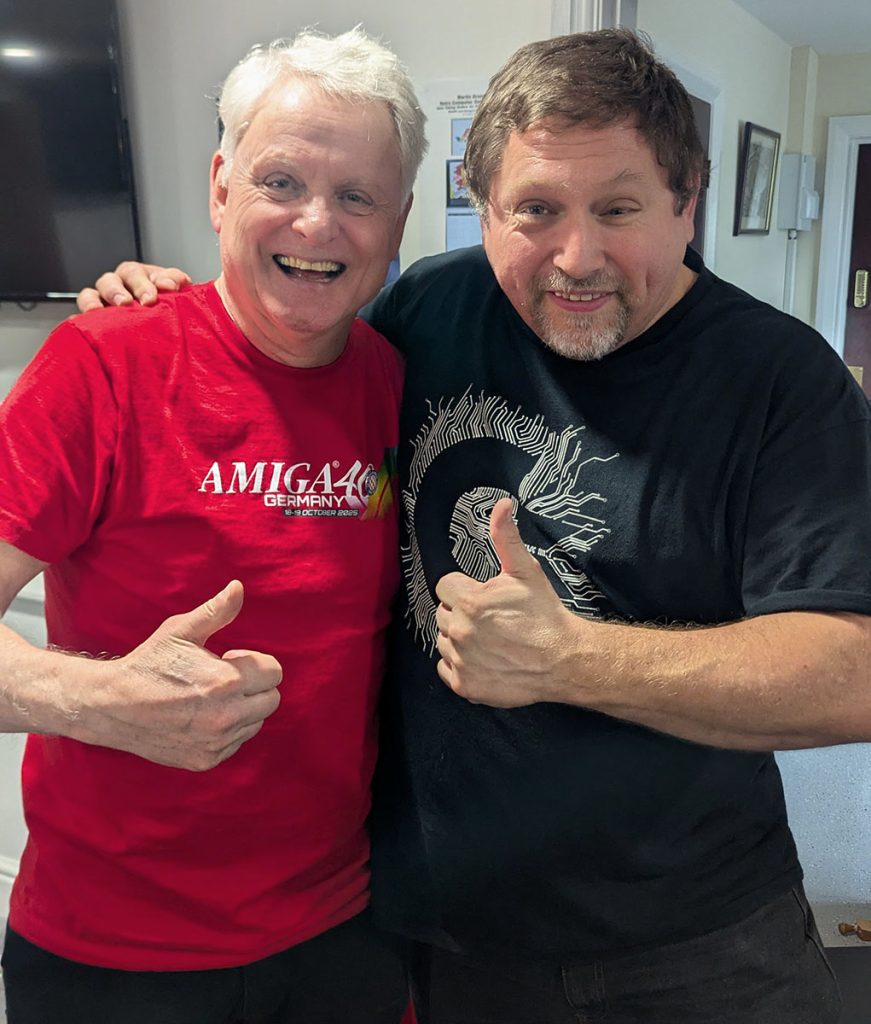
There’s a strange rhythm to the Amiga world. You set off on a trip to demo new hardware or speak at a show, and somehow you end up reconnecting people who haven’t spoken in decades. That’s what happened this year, standing in RJ Mical’s house after Amiga 40th, when my phone rang. On the line? John Böhmer, the founder and CEO of Scala Inc., and the subject of my three-part interview I ran in Amiga Future earlier this year.
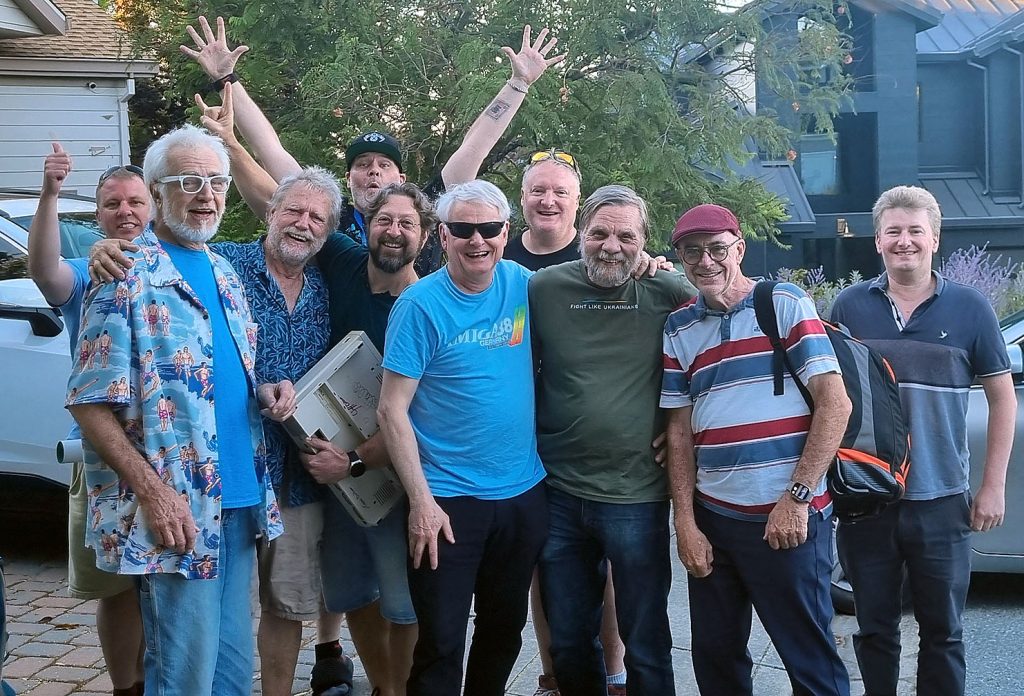
I told him I was in California at RJ Mical’s house at an after-party celebration. I immediately handed the phone to RJ. And just like that, history caught up with itself. Two icons from very different corners of the Amiga story reconnecting after nearly 30 years. I think then chatted for more than 20 minutes. A simple call, but a meaningful one.Those are the moments that don’t make it onto the show schedule, but they stay with you.
There are others too, the kind I’ll be saving for print. A quiet revenge auction involving Jack Tramiel. A museum visit in Amsterdam that got a little… colourful. Sunflowers may have been involved. Those stories will appear in the January 2026 Amiga Future Soapbox. But they’re not just stories. They’re the connective tissue of this whole wild thing. Because for all the upgrades and revisions and next-gen boards, the Amiga community still runs on something no chipset can replace: memory, mischief, and the spark that still lights up someone’s face when you say… “Wait, you were there too?”
We were. We are. And we still will be.
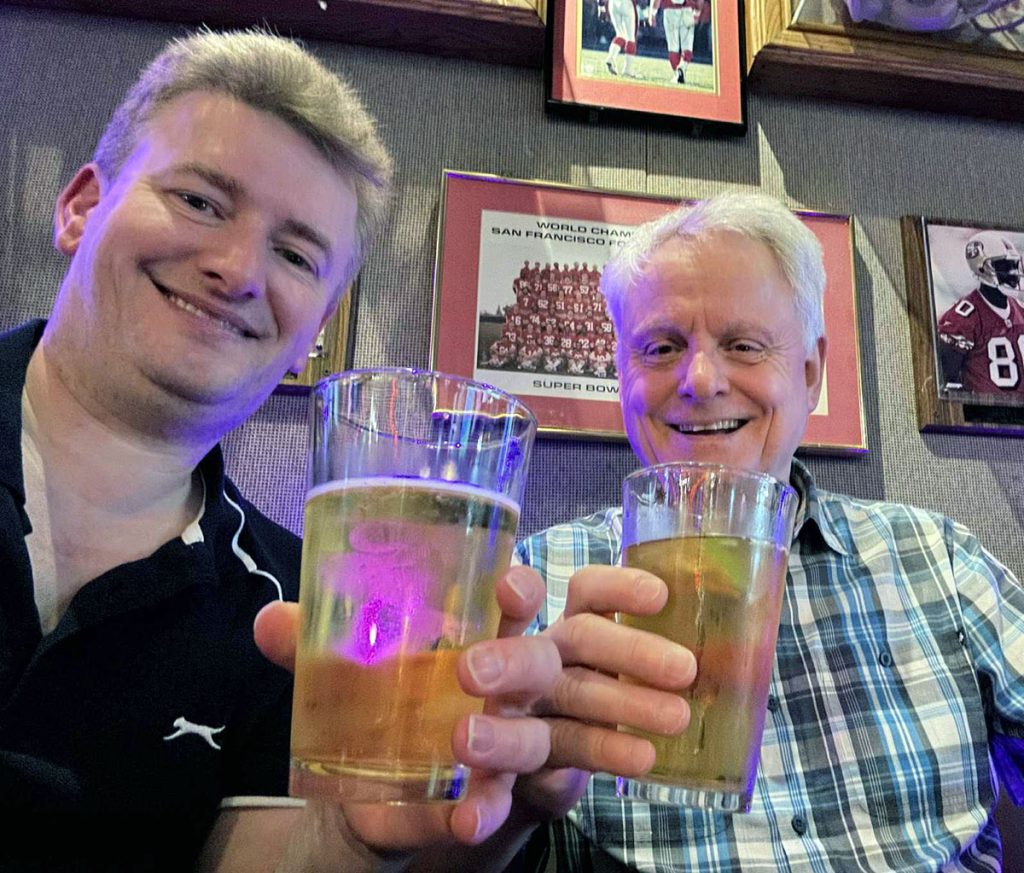
All that remains to be said is Merry Christmas and Season’s Greetings to one and all.